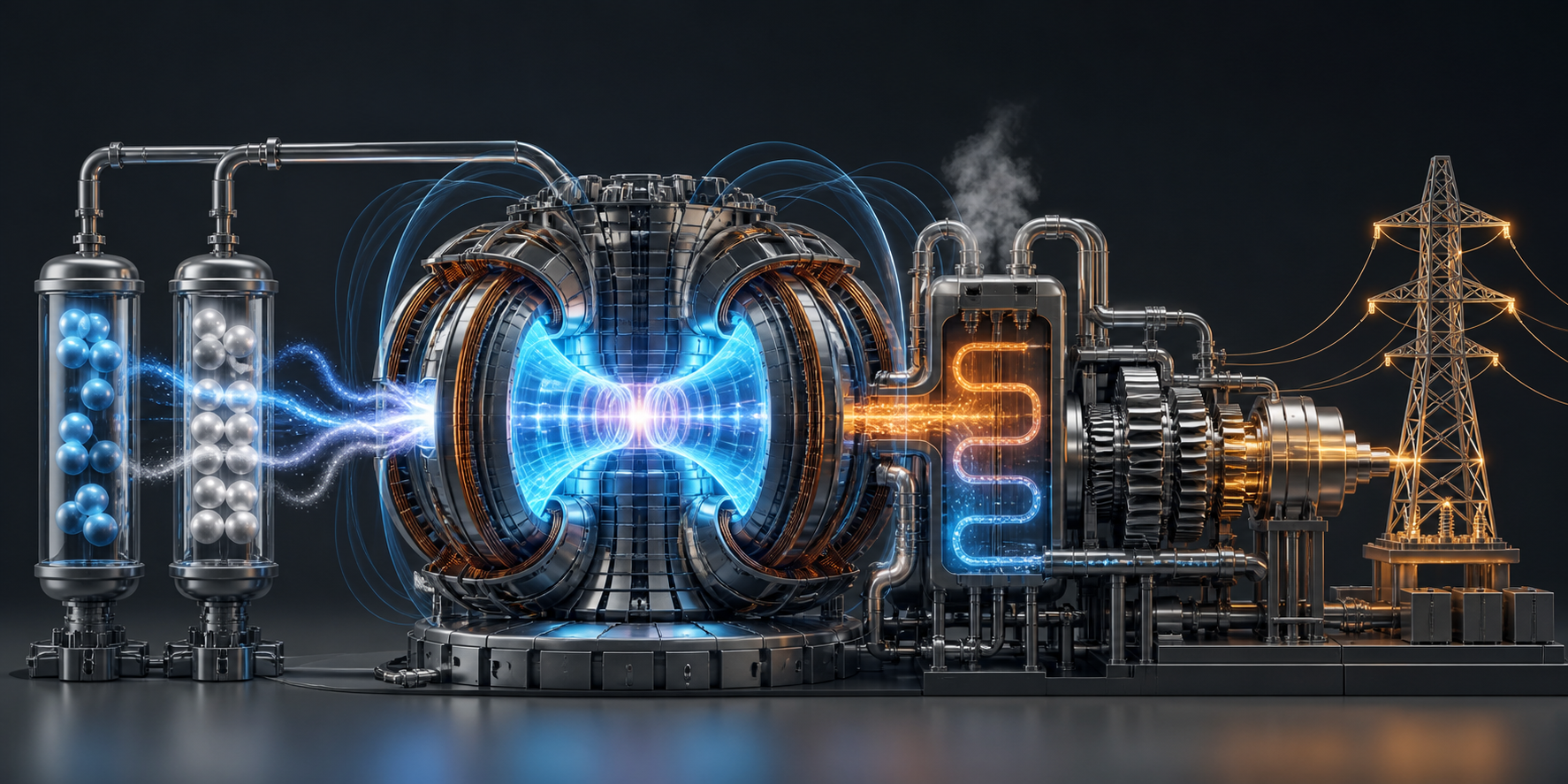
D-T baseline
Deuterium-tritium remains the most practical near-term fusion fuel because it burns at comparatively accessible temperatures. Its main cost is the 14.1 MeV neutron, which drives blanket design, tritium breeding, activation, shielding, and materials replacement.
This topic connects directly to the Fusenergy simulator, the mega library, and the premium data workspace. Readers can use the article to frame assumptions, then test those assumptions with interactive controls and exported analysis data.
Advanced fuels
D-D, D-He3, and p-B11 reduce or reshape some neutron questions, but they demand harder plasma conditions. Advanced fuels should not be read as shortcuts. They are long-term options that shift the difficulty from one part of the plant to another.
This topic connects directly to the Fusenergy simulator, the mega library, and the premium data workspace. Readers can use the article to frame assumptions, then test those assumptions with interactive controls and exported analysis data.
Supply chain reality
Fuel supply is a power-plant issue. Deuterium is abundant, tritium must be bred and carefully tracked, helium-3 is scarce, and boron fuels still need extreme plasma performance.
This topic connects directly to the Fusenergy simulator, the mega library, and the premium data workspace. Readers can use the article to frame assumptions, then test those assumptions with interactive controls and exported analysis data.