Safety boundary first
This guide explains the major systems and materials used in serious fusion programs. It does not provide hardware dimensions, high-voltage construction steps, fuel handling procedures, operating settings, or instructions for building a device. Even small fusion demonstrators can involve lethal voltage, vacuum implosion risk, x-rays, neutron radiation, activated materials, and regulated hydrogen isotopes.
The practical answer to "how do you create a fusion reactor?" is: create a licensed multidisciplinary project, define a confinement concept, design each subsystem against safety and regulatory requirements, validate components in stages, and operate only inside a professionally controlled facility.
1. Choose the confinement approach
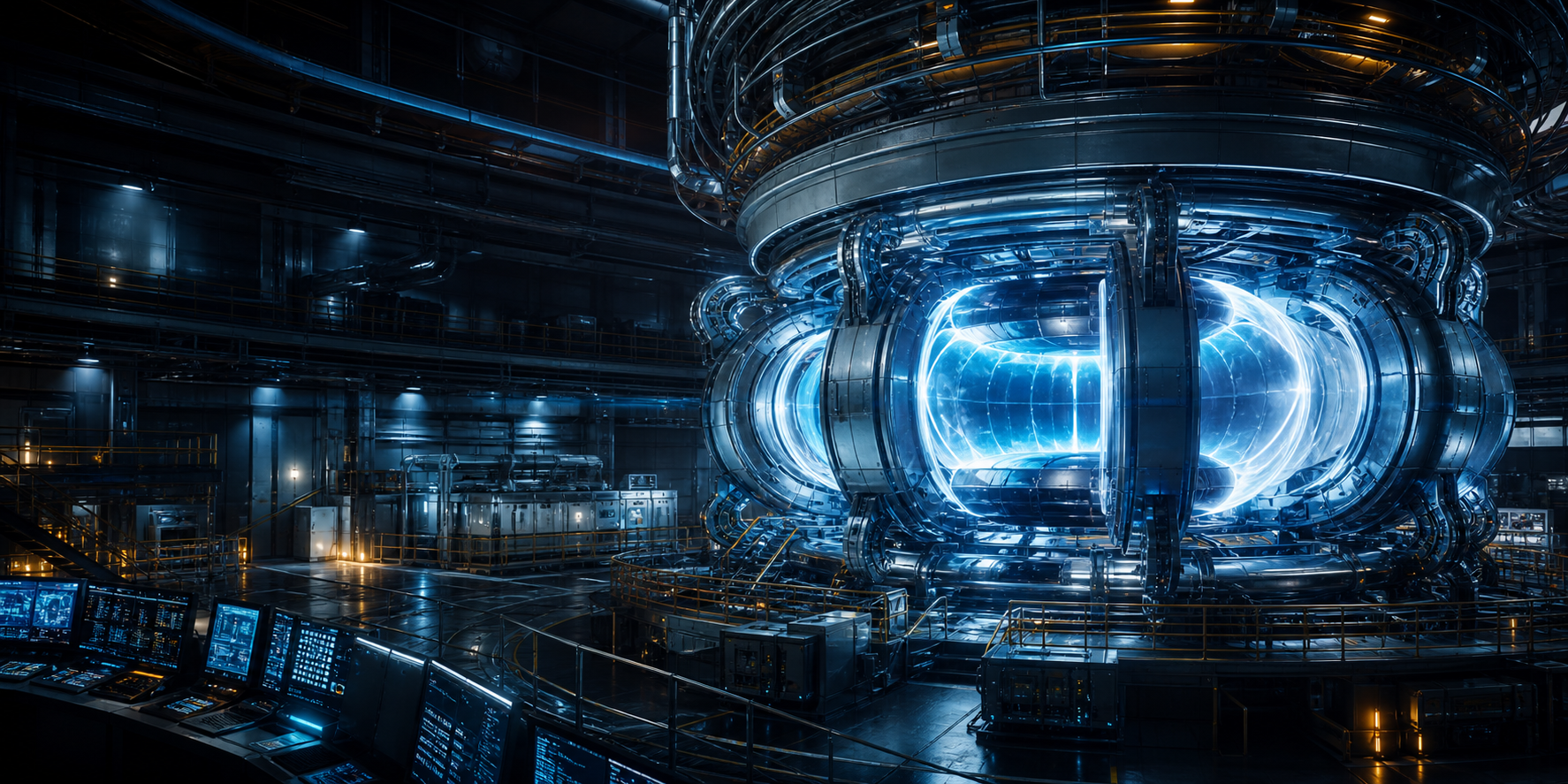
The first decision is the physics architecture. Tokamaks and stellarators use magnetic fields to confine plasma inside a torus. Inertial fusion uses drivers such as lasers to compress small fuel targets. Other concepts, including magnetized target fusion, field-reversed configurations, and pinches, trade different engineering problems against one another.
For a power plant, this choice sets the shape of the vessel, magnet or driver requirements, pulse length, maintenance approach, fuel cycle, and energy-conversion path.
2. Core materials and subsystems
A reactor-grade fusion project needs many material families, not one special ingredient. The main categories are:
- Fuel materials: deuterium for many experiments, tritium for D-T reactor concepts, and research fuels such as D-D, D-He3, or p-B11 for harder operating regimes. Tritium is radioactive and must be handled only with licensed inventory controls.
- Vacuum and containment: stainless steel vacuum vessels, ports, seals, pumps, cryostat structures, leak detection, and confinement barriers.
- Magnetic systems: superconducting coils such as Nb3Sn, NbTi, or high-temperature-superconductor tapes, plus copper stabilizers, insulation, structural supports, cryogenic cooling, power supplies, and quench protection.
- Heating and current drive: neutral beam systems, radiofrequency sources, microwave or electron-cyclotron systems, antennas, waveguides, launchers, and protected power electronics. Inertial systems use a different driver stack, usually laser or pulsed-power hardware.
- Plasma-facing materials: tungsten or other qualified armor materials, first-wall panels, divertor targets, heat sinks, cooling channels, and structures designed for high heat flux and neutron exposure.
- Blanket and shielding: steel structures, lithium-bearing breeder materials for D-T fuel cycles, neutron multipliers in some concepts, coolant loops, tritium extraction hardware, and biological shielding.
- Heat and power conversion: coolants, heat exchangers, turbines or other conversion hardware, generators, condensers, pumps, and grid-interface systems.
- Diagnostics and control: magnetic probes, interferometry, spectroscopy, cameras, neutron diagnostics, temperature and pressure sensors, plasma control software, interlocks, and independent shutdown systems.
- Maintenance and waste systems: remote handling equipment, modular replacement paths, inspection tools, activated-material storage, contamination monitoring, and documented disposal workflows.
3. Why materials are the bottleneck
Fusion plasmas can be extremely hot, but the wall problem is not only heat. In D-T systems, fast neutrons leave the plasma and strike surrounding components. They can displace atoms, produce gases inside metals, change mechanical properties, and activate some materials. That is why a credible reactor plan includes irradiation testing, replacement schedules, remote maintenance, and shielding from the beginning.
Material selection is therefore a plant-availability decision. A component that survives a short experiment may still fail the requirements of a reliable electricity-producing machine.
4. Development sequence
Professional reactor programs usually move from physics design to subsystem qualification, integrated experimental operation, fuel-cycle demonstration, heat-extraction tests, maintenance validation, and finally plant-level reliability work. Each stage answers a different question. A plasma record is valuable, but it is not the same as a net-electric power plant.
Useful milestone questions include: Was the result measured at the plasma, target, machine, or grid boundary? Was tritium consumed, bred, or only modeled? Were materials exposed to fusion-relevant neutrons? Was heat removed continuously? Could the damaged component be inspected and replaced safely?
5. What learners can do safely
Students and early builders should stay in the safe lane: simulation, plasma physics coursework, vacuum-system theory, material-science reading, controls practice on low-risk models, and analysis of public reactor data. Avoid attempting to build neutron-producing or high-voltage fusion devices without an institutional safety program, licensed oversight, radiation monitoring, and trained operators.
For practical learning, use the Fusenergy simulator to compare temperature, density, confinement, and blanket capture as concepts. Then read the handbook chapters on tokamaks, superconducting magnets, tritium breeding blankets, neutron materials damage, divertors, diagnostics, and plant balance.
Public references
This article is based on public educational references from recognized fusion organizations: DOE Explains Tokamaks, ITER tokamak components, ITER tritium breeding, and IAEA fusion materials research.